

Impact of wood species on the chemical composition, colour, and sensory characteristics of white wine Sourced from the research article: “Impact of the Wood Species Used on the Chemical Composition, Color and Sensory Characteristics of Wine" (Foods, 2025). This is a translation of a technical article originally written in Spanish.

This study evaluated the impact of using pieces of traditional oak, other oak species, and woods from different genera on the quality of white wine. The use of the different woods had minimal effects on the basic oenological parameters but modified the phenolic, chromatic, and sensory characteristics of the wine. The sensory panel preferred the wine aged with Q. petraea, followed by Q. humboldtii and Robinia pseudoacacia. This research advances understanding of the potential effects of different wood pieces on white wines, and underscored the significance of some woods that had not been previously studied.
Introduction
The use of wood results in changes in the composition and sensory properties of wine. Traditionally, Q. petraea and Q. alba have been the most commonly used, but alternative oaks and other wood species are currently being investigated as a potential cooperage wood source and as a strategy to diversify wines, thereby contributing to innovation and diversification. These woods have been mostly evaluated in red wines, thus knowledge regarding white wines is limited. The white wine market is dominated by young, fresh, and fruity wines, although the use of barrels or wood pieces is beginning to gain interest. Barrel aging promotes micro-oxygenation, but it can cause oxidation in white wines if air exposure is excessive. In this context, wood pieces represent a viable alternative provided that oxygenation is carefully controlled. Some of the woods studied in white wines are Robinia pseudoacacia (barrels and pieces), Q. pyrenaica, Castanea sativa, and Prunus avium (pieces)
Wood, wine, and analysis
A young Verdejo white wine from the 2023 vintage (pH 3.14, total acidity 5.8 g/L, volatile acidity 0.37 g/L, 12.53 % v/v alcohol, TPI 9.4, free SO2 25 mg/L, total SO2 76 mg/L) was maintained in contact with the following wood for 20 days at 80.3 cm²/L in 600 mL vessels: RP (Robinia pseudoacacia), AD (Acacia dealbata), PA (Prunus avium), NP (Nothofagus pumilio), QC (Q. candicans), QH (Q. humboldtii), QPR (Q. petraea rumano), QPF (Q. petraea francés), and QA (Q. alba). The woods had been naturally seasoned and convection-toasted (210 °C, 2 h, medium level) in an industrial oven and the staves cut into pieces measuring 16 × 7.8 × 2 cm. There was also a control wine without wood contact (CT). Oenological parameters (OIV methods), spectra, and phenolic compounds were analysed by UV-Vis spectrophotometry, while sensory characteristics were evaluated through hedonic preference tests (28 consumers) and descriptive profiling (17 expert tasters).
Effect of different woods on the composition and colour of white wine
In general, the oenological parameters (alcohol, sugars, pH, and total acidity) were unaffected or minimally affected. Volatile acidity increased in wines aged with wood, except for the AD wine, but remained within legal limits and was not perceptible in the sensory evaluation. Free SO2 decreased in the wines containing wood, with PA, NP, QC, QPR, and QA exhibiting the lowest levels of both free and total SO2.
After 20 days, wines aged with wood showed higher phenolic content than the CT (Figure 1), consistent with previous studies
The spectra in the range of 335 and 470 nm showed higher absorbance in the wines containing wood; all other differences with CT were smaller or inexistant (Figure 2). All wines aged with wood exhibited higher colour intensity, particularly AD and RP, while the remaining wines showed similar values among them. The AD wine was the only wine that showed an increase at 520 nm and 420 nm, maintaining its hue. In the other wines, including CT, absorbance at 520 nm did not increase, resulting in a higher hue. The PA, AD, NP, and QH wines showed higher values at 335 nm, suggesting a greater content of hydroxycinnamic acids. Between 345 and 355 nm, AD and QH wines exhibited the highest values, attributable to glycosylated flavonols.
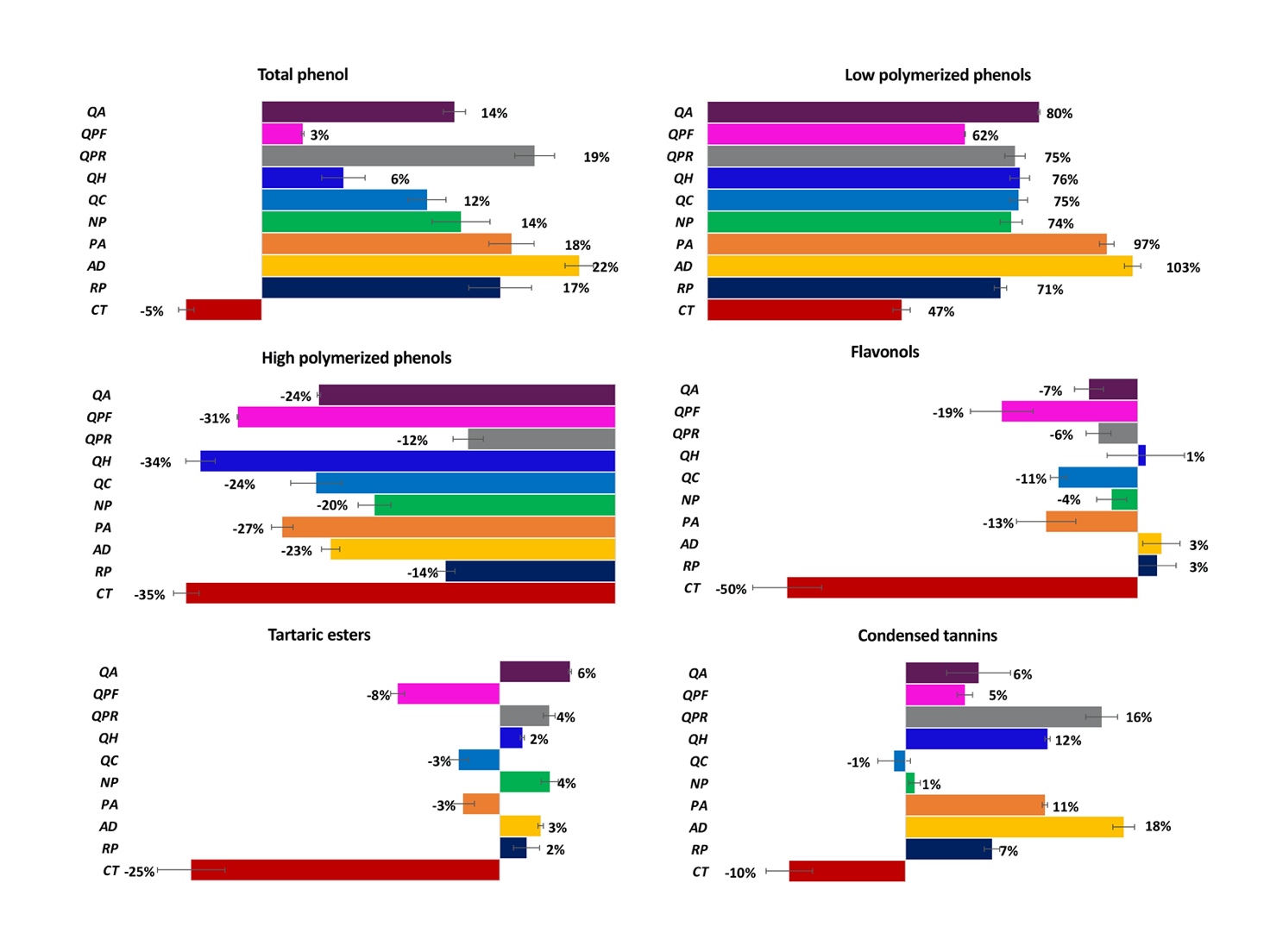
Figure 1. Percentage difference of wines without wood (CT) or with different types of wood (RP, AD, PA, NP, QC, QH, QPR, QPF, and QA) after 20 days compared to the initial wine.
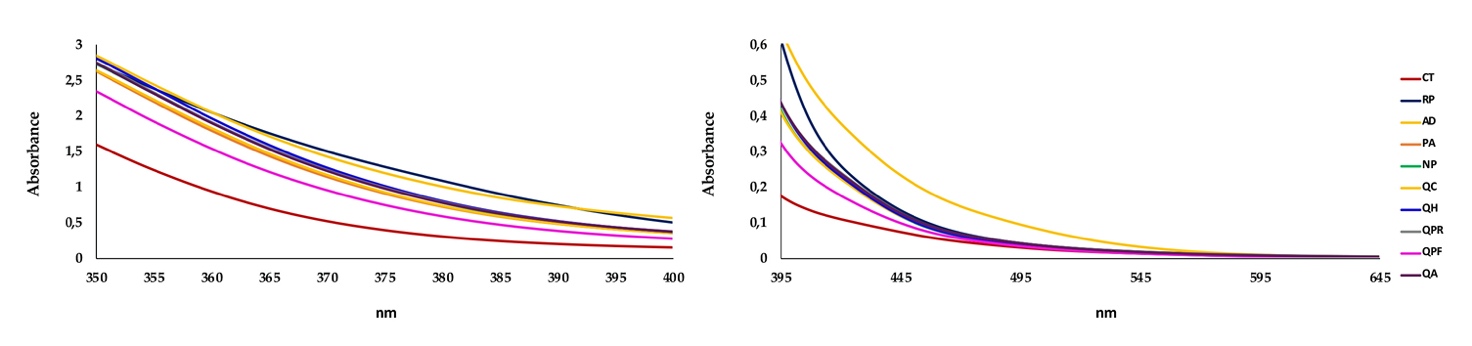
Figure 2. Spectrum of Verdejo wines after 20 days without wood (CT) or with different types of wood (RP, AD, PA, NP, QC, QH, QPR, QPF, and QA).
Sensory analysis
The QPF wine was the preferred one (41%), followed by those made with alternative woods: QH (23 %) and RP (18 %) (Figure 3). Although acacia is already a valued wood for white wines, Q. humboldtii, a previously unstudied option, stood out as a promising alternative, as the white wine aged with this wood was the second most preferred by the tasters. All evaluated variables showed significant differences, except for frankness and bitterness. In the visual phase, the tasters confirmed the chromatic differences observed in the spectrum, highlighting the intensity and golden hue of the AD wine, and the lower intensity with greenish tones of the CT wine. In the olfactory phase, wines with QPR and QH showed enhanced aromatic intensity, probably due to an increased presence of woody and toasted notes. Frankness was similar in all wines, indicating the absence of off-flavours. Wines aged with wood showed lower intensity of fruity, floral, and vegetal aromas, which is expected due to the overlapping effect of compounds released from the wood. The NP wine best preserved the varietal aromas, in line with previous studies
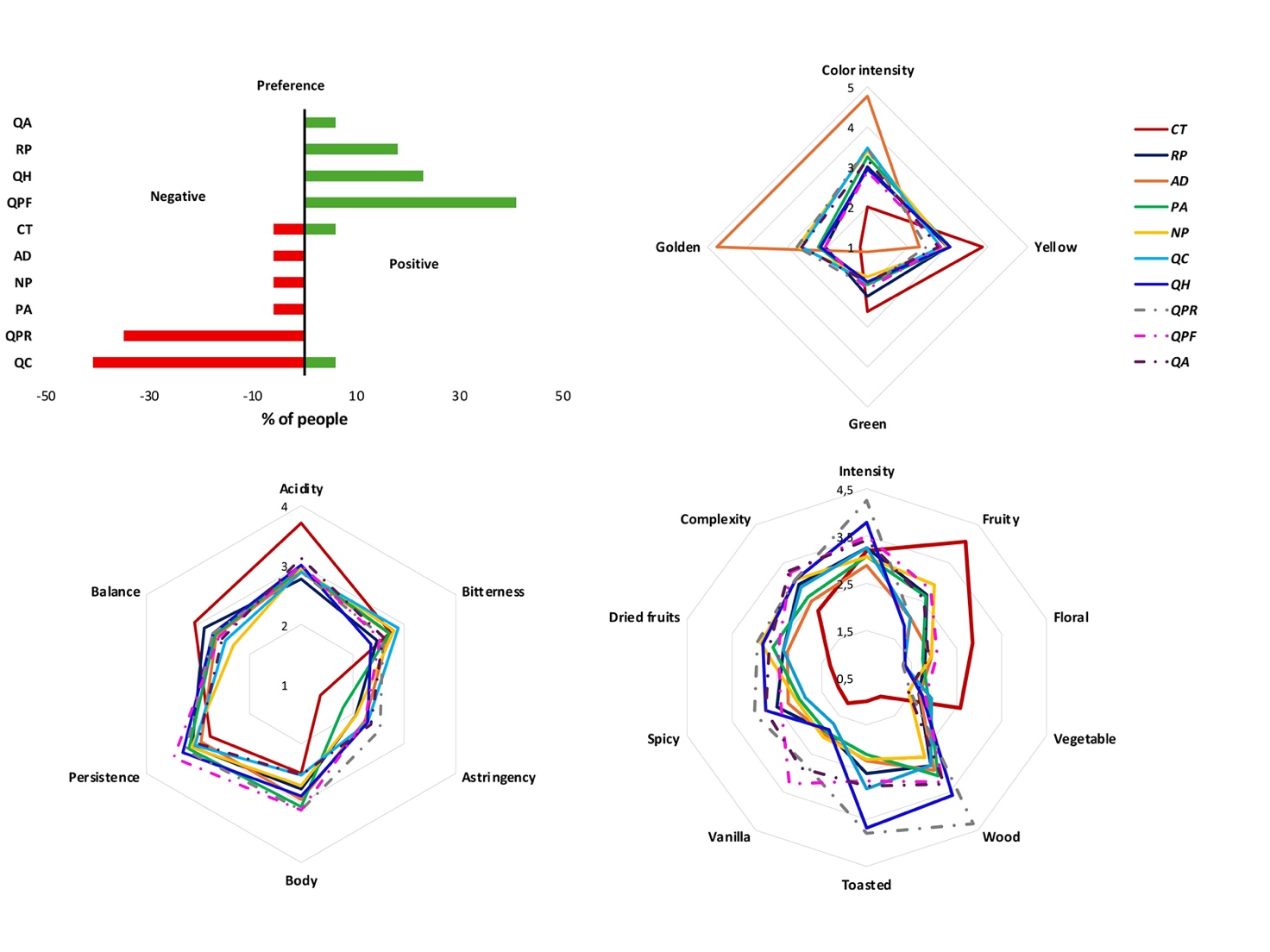
Figure 3. Taster preference and sensory profile of wines after 20 days without wood (CT) or with different types of wood (RP, AD, PA, NP, QC, QH, QPR, QPF, and QA).
Conclusions
Wines in contact with the studied woods showed significant changes in phenolic composition, chromatic characteristics, and sensory profiles. Acacia woods (RP and AD) increased the total phenolic content in the wines, particularly those with low polymerisation. Flavonol content was higher in RP, AD, and QH wines, suggesting release from the wood. Contact with wood allowed the wines to preserve or enhance tartaric esters, thereby promoting oxidative stability. Condensed tannins were higher in wines exposed to AD, PA, and RP woods, in line with their phenolic content. The interaction of wine with AD and RP woods led to an increase in UV-visible absorbance due to phenolic release. Sensory analysis revealed differentiated profiles, with the wine in contact with QPF wood being the most appreciated, followed by QH and RP, highlighting the potential of non-traditional woods for use in white.
Acknowledgments: We thank Juan Carlos Crespo for his support in the development of some of the analyses, TnCoopers cooperage for providing the woods used in the study, the Yllera group for supplying the wine employed in the research, and the PID2022-139694OB-I00 Project funded by MCIN /AEI /10.13039/501100011033 / FEDER, UE.

Notes
- 1. Martinez-Gil, A.M.; del Alamo-Sanza, M.; Sánchez-Gómez, R.; Nevares, I. (2020). Alternative woods in enology: Characterization of tannin and low molecular weight phenol compounds with respect to traditional oak woods. A review. Molecules, 25, 1474. DOI: 10.3390/molecules25061474.
- 2. Martinez-Gil, A.M.; del Alamo-Sanza, M.; Sánchez-Gómez, R.; Nevares, I. (2020). Alternative woods in enology: Characterization of tannin and low molecular weight phenol compounds with respect to traditional oak woods. A review. Molecules, 25, 1474. DOI: 10.3390/molecules25061474.
- 3. Martinez-Gil, A.M.; del Alamo-Sanza, M.; Sánchez-Gómez, R.; Nevares, I. (2020). Alternative woods in enology: Characterization of tannin and low molecular weight phenol compounds with respect to traditional oak woods. A review. Molecules, 25, 1474. DOI: 10.3390/molecules25061474
- 4. Délia, L.; Jordão, A. M.; Ricardo-da-Silva, J. M. (2017). Influence of different wood chips species (oak, acacia and cherry) used in a short period of aging on the quality of 'Encruzado' white wines. Mitt. Klosterneuburg 67, 84-96.
- 5. Jordão, A.M.; Correia, A.C.; Botelho, R.V.; Ortega-Heras, M.; González-SanJosé, M.L. (2025). Phenolic content, volatile composition and sensory profile of red wines macerated with toasted woods from different South American botanical species. J Food Compost Anal., 137, 106854. https://doi.org/10.1016/j.jfca.2024.106854.
References
- Martinez-Gil, A.M.; del Alamo-Sanza, M.; Sánchez-Gómez, R.; Nevares, I. (2020). Alternative woods in enology: Characterization of tannin and low molecular weight phenol compounds with respect to traditional oak woods. A review. Molecules, 25, 1474. https://doi.org/ 10.3390/molecules25061474.
- Délia, L.; Jordão, A. M.; Ricardo-da-Silva, J. M. (2017). Influence of different wood chips species (oak, acacia and cherry) used in a short period of aging on the quality of ‘Encruzado’ white wines. Mitt. Klosterneuburg 67, 84-96.
- Jordão, A.M.; Correia, A.C.; Botelho, R.V.; Ortega-Heras, M.; González-SanJosé, M.L. (2025). Phenolic content, volatile composition and sensory profile of red wines macerated with toasted woods from different South American botanical species. J Food Compost Anal., 137, 106854. https://doi.org/10.1016/j.jfca.2024.106854.
Article statistics
 Views: 3298
Downloads
 XML: 167