

What are we really measuring when we measure dissolved oxygen in wine? Sourced from the research article: "Reassessing dissolved oxygen measurement in wines: physicochemical and metrological limitations of mass-based reporting" (Food Chemistry, 2026). Original language of the article: Spanish.
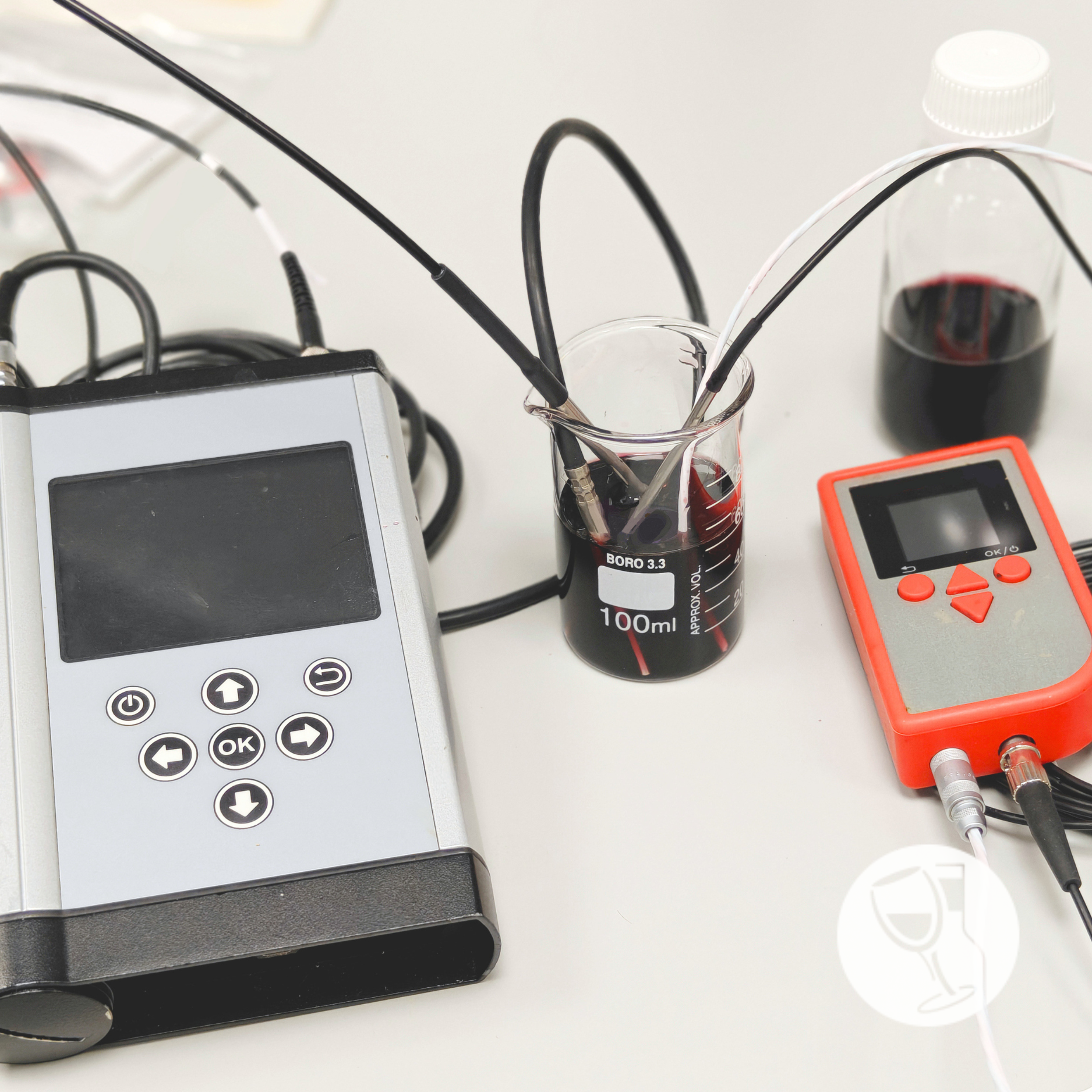
Oxygen meters do not measure oxygen in mg/L. Their sensors respond to oxygen partial pressure (pO2) or flux, and the instrument converts that signal using a solubility model. In wine, the matrix can affect both solubility and sensor response. Values in mg/L are useful under controlled conditions, but are not always comparable across wines or instruments. Recording the native signal, temperature, pressure, and context allows more reliable interpretation of the result and its consumption kinetics (Nevares & del Alamo-Sanza, 2026).
A familiar number that hides a conversion
The usual procedure is simple: insert the probe, wait for a stable reading and note, for example, 0.42 mg/L. It looks direct, but the wine-to-screen result involves a conversion.
An oxygen sensor does not weigh the oxygen in a litre of wine. In a Clark electrode, the current depends on flux through the membrane; in an optical sensor, oxygen quenches an indicator’s luminescence. The primary response reflects oxygen availability at the sensor interface—pO2 or flux. To express it in mg/L, the instrument applies a solubility relationship.
The result is not necessarily wrong, but it is derived: its accuracy depends on both the sensor and the model. An instrument can be precise and repeatable yet still report only an approximate concentration if the model does not represent the wine.
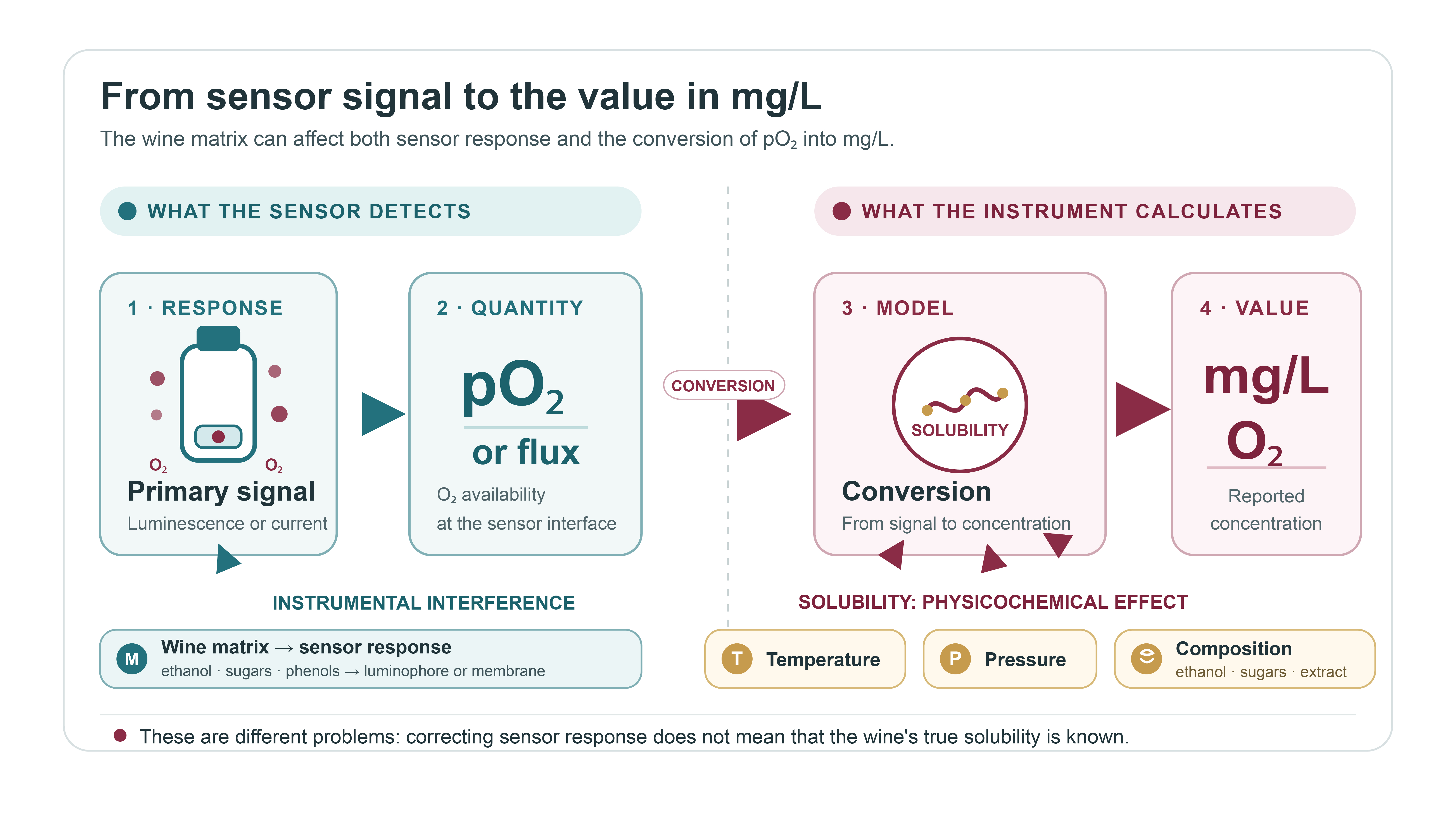
Figure 1. The matrix can affect both the sensor response and the conversion of pO2 into mg/L.
Wine does not behave like water
Many oxygen meters are calibrated in air-saturated water or use water-based solubility relationships. These are suitable references for checking the sensor, but not for assuming that pO2 and mg/L are related in the same way in wine.
Wine is a complex, reactive hydroalcoholic matrix. Ethanol, sugars, and extract affect solubility; temperature and pressure affect both solubility and transport. Headspace and CO2 take us still further from a glass of water at equilibrium.
Therefore, no single coefficient applies to every wine. At the same pO2, different wines may contain different amounts of physically dissolved oxygen; a generic conversion can hide that difference rather than resolve it.
Two matrix effects must be kept separate. The physicochemical effect changes solubility and the pO2-to-mg/L relationship. The instrumental effect alters sensor response and may depend on the luminophore and its support or, in polarographic instruments, on membrane diffusion. In del Alamo-Sanza et al. (2014)
Surprisingly, we knew this half a century ago
Between 1970 and 1979, several Soviet groups studied oxygen solubility and measurement in real wines. Language barriers and limited journal access kept the work little known, yet its findings remain remarkably current.
Manuilova found that increasing temperature reduced oxygen solubility while the polarographic response could rise. Fal’kovich concluded that membrane sensors responded to pO2, not directly to a mass of oxygen. Moditis highlighted the role of extract, and Datunashvili proposed composition-specific equations for wine.
The shared message was clear: converting a signal into mg/L requires knowledge of oxygen solubility in that particular liquid. Half a century later, our sensors are better, but the conversion often remains generic
A better sensor does not solve the model problem
Optical sensors have been a major advance: they are stable, require less maintenance, do not consume oxygen during measurement and allow measurements with minimal disturbance.
Yet the luminophore still responds to oxygen in its immediate surroundings, and the software needs a model to express that response as a mass concentration. Better precision and repeatability do not correct for unknown wine solubility.
We can get a more stable number without making it more universal. Precision and interpretive validity are different questions.
So, should we stop using mg/L?
No. Values in mg/L are useful for tracking one wine under fixed conditions and relative changes.
Use them with caution when comparing matrices, instruments, or laboratories; in stoichiometric calculations or estimates of SO2 requirements; and when interpreting a single reading as if the wine were at equilibrium.
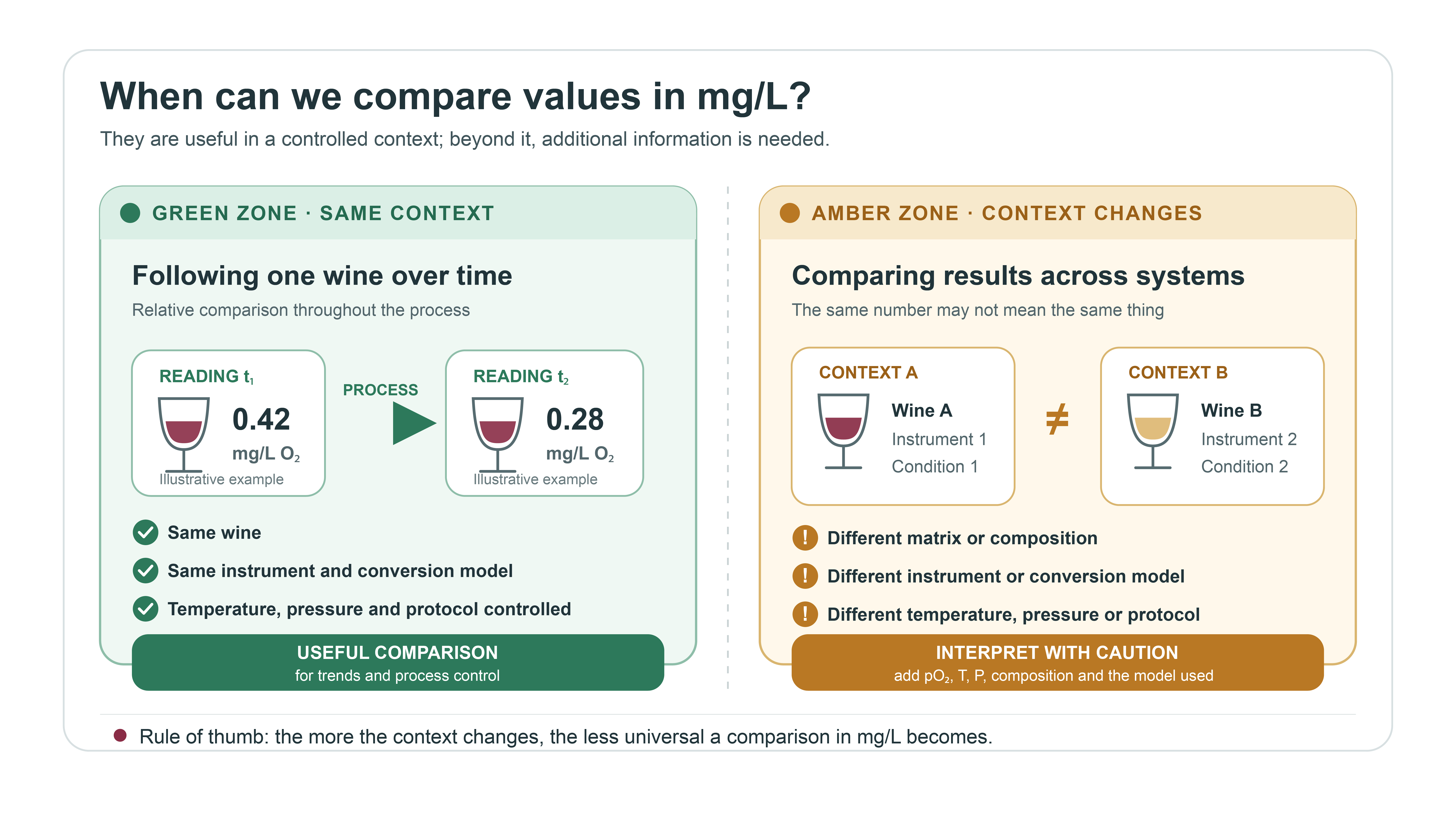
Figure 2. Values in mg/L are useful within a controlled context; beyond it, they require additional information.
A simple proposal for better winery measurements
To understand where the number comes from and when it is valid, record the following whenever the instrument allows:
- The native reading. pO2, hPa or percentage saturation, in addition to mg/L.
- Actual temperature and absolute pressure.
- Calibration and model. Record those used to convert pO2 into mg/L, keeping them separate from instrumental compensation for matrix components.
- The matrix. Identify the wine, alcohol content, sugars, extract, and other relevant factors.
- Measurement context. Record where and when the measurement was made, stabilisation time, agitation, headspace, and whether the wine was taking up or consuming oxygen.
If the instrument reports only mg/L, the measurement remains useful for internal control if the instrument and protocol are kept constant. Do not give the result a universality that the procedure cannot guarantee.
A single reading reflects the momentary balance between oxygen entry and consumption. In process studies, the evolution of pO2—its slope, depletion time, or area under the curve—often tells us more than one value. Values in mg/L remain useful as an operational expression within a known model and set of conditions
Conclusion
The question is not whether modern oxygen meters measure well, but what the number on the screen means.
In wine, values in mg/L result from a conversion that depends on composition, temperature, pressure, and the solubility model. Possible matrix interference with the sensor adds a separate effect. The two must be evaluated independently.
Recording the native signal and the measurement context, and paying attention to kinetics, makes oxygen control more transparent, comparable, and useful for winery decisions.
Acknowledgements: The authors sincerely thank Alex Schulkin, a researcher at the Australian Wine Research Institute, for his invaluable help in translating the Russian-language articles that form an important part of this review.

Notes
- 1. del Alamo-Sanza, M., Pando, V., & Nevares, I. (2014). Investigation and correction of the interference of ethanol, sugar and phenols on dissolved oxygen measurement in wine. Analytica Chimica Acta, 809, 162–173. https://doi.org/10.1016/j.aca.2013.11.053
- 2. Manuilova, T. A., Lipits, B. V., & Sokolova, A. F. (1970). Determination of oxygen solubility in wine at various temperatures. Sbornik Nauchno-Issledovatel’skikh Rabot, Moldavskii NII Pishchevoi Promyshlennosti, 10, 64–71. (In Russian).
- 3. Fal’kovich, Y. E., Moditis, I. Z., & Gun’ko, G. P. (1976). Limit solubility of oxygen in wines. Izvestiya Vysshikh Uchebnykh Zavedenii. Pishchevaya Tekhnologiya, 2, 32–34. (In Russian).
- 4. Moditis, I. Z., Strukova, V. E., & Fal’kovich, Y. E. (1977). Maximum solubility of atmospheric oxygen in wine. Vinodelie i Vinogradarstvo SSSR, 4, 15–18. (In Russian).
- 5. Datunashvili, E. N., Ezhov, V. N., Ledenkova, T. P., Kozlovskii, Y. V., & Ananchenkova, G. M. (1979). Effect of basic constituents of wine on the solubility of atmospheric oxygen. Vinodelie i Vinogradarstvo SSSR, 4, 56–59. (In Russian).
- 6. del Alamo-Sanza, M., Sánchez-Gómez, R., Martínez-Martínez, V., Martínez-Gil, A., & Nevares, I. (2021). Air saturation methodology proposal for the analysis of wine oxygen consumption kinetics. Food Research International, 147, 110535. https://doi.org/10.1016/j.foodres.2021.110535
References
- Nevares, I., & del Alamo-Sanza, M. (2026). Reassessing dissolved oxygen measurement in wines: Physicochemical and metrological limitations of mass-based reporting. Food Chemistry, 527, 150953. Advance online publication. https://doi.org/10.1016/j.foodchem.2026.150953
- del Alamo-Sanza, M., Pando, V., & Nevares, I. (2014). Investigation and correction of the interference of ethanol, sugar and phenols on dissolved oxygen measurement in wine. Analytica Chimica Acta, 809, 162–173. https://doi.org/10.1016/j.aca.2013.11.053
- Manuilova, T. A., Lipits, B. V., & Sokolova, A. F. (1970). Determination of oxygen solubility in wine at various temperatures. Sbornik Nauchno-Issledovatel’skikh Rabot, Moldavskii NII Pishchevoi Promyshlennosti, 10, 64–71. (In Russian).
- Fal’kovich, Y. E., Moditis, I. Z., & Gun’ko, G. P. (1976). Limit solubility of oxygen in wines. Izvestiya Vysshikh Uchebnykh Zavedenii. Pishchevaya Tekhnologiya, 2, 32–34. (In Russian).
- Moditis, I. Z., Strukova, V. E., & Fal’kovich, Y. E. (1977). Maximum solubility of atmospheric oxygen in wine. Vinodelie i Vinogradarstvo SSSR, 4, 15–18. (In Russian).
- Datunashvili, E. N., Ezhov, V. N., Ledenkova, T. P., Kozlovskii, Y. V., & Ananchenkova, G. M. (1979). Effect of basic constituents of wine on the solubility of atmospheric oxygen. Vinodelie i Vinogradarstvo SSSR, 4, 56–59. (In Russian).
- del Alamo-Sanza, M., Sánchez-Gómez, R., Martínez-Martínez, V., Martínez-Gil, A., & Nevares, I. (2021). Air saturation methodology proposal for the analysis of wine oxygen consumption kinetics. Food Research International, 147, 110535. https://doi.org/10.1016/j.foodres.2021.110535
Article statistics
 Views: 3